



AI SDLC Consulting
Spec-driven development for AI-assisted teams
An AI model can only build what it is told. Vague tickets produce plausible code that solves the wrong problem. We help your team write specs that people and models can both execute against - clear intent, acceptance criteria and worked examples - and keep them traced through to tests and code.
Who this is for
For teams whose AI output is only as good as the ticket behind it
When requirements live in people's heads, assistants fill the gaps with guesses. Spec-driven development makes the intent explicit before any code is generated, so review is about correctness rather than archaeology.
Product and engineering teams using coding agents
You want agents to work from a written brief, not a one-line prompt and a hope.
Teams with frequent rework after review
Changes pass the build but miss edge cases, business rules or non-functional needs nobody wrote down.
Products that need an audit trail
Regulated work where you must show which requirement a change satisfies and how it was tested.
What we do
We make specs executable
We work with your product owners, tech leads and testers on real features, not hypothetical ones.
Define a spec format
A lightweight template covering intent, scope, constraints and non-goals that fits the tools and tickets you already use.
Write testable acceptance criteria
Criteria phrased so a person or a model can turn each one into a check, including error paths and edge cases.
Add worked examples
Concrete inputs and expected outputs that remove ambiguity and give models something to verify against.
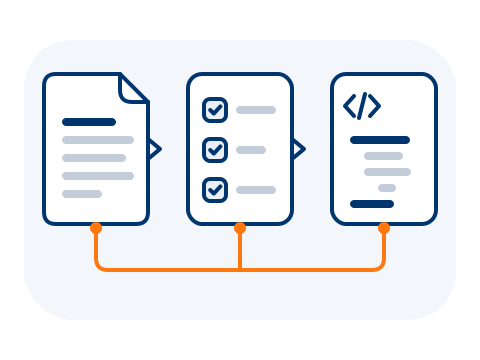
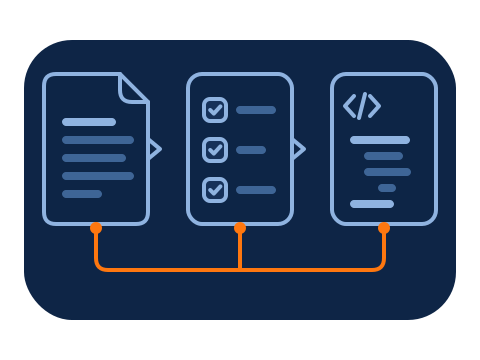
Trace spec to tests to code
Link each criterion to the tests that prove it and the changes that implement it, so gaps are visible in review.
Fit specs into the loop
Make the spec the input to generation and the reference for review within your development loop.
Keep specs alive
Agree when specs are updated, who owns them and how changes flow back into tests when requirements move.
What you get
What your team keeps
Templates and examples stored alongside your code, owned by your team.
- Spec template. a short, versioned format for features, fixes and technical changes.
- Acceptance criteria guide. patterns for writing criteria that convert cleanly into tests.
- Worked example specs. a handful of your own features rewritten in the new format as references.
- Traceability convention. how specs, tests and pull requests reference each other.
- Review checklist. what reviewers check against the spec before approving AI-generated changes.
How it works
How a spec-driven engagement runs
Step 01
Review
We read a sample of recent tickets, specs and pull requests to see where ambiguity causes rework.
Step 02
Draft
We agree a template and criteria style with your leads and rewrite a few live features with it.
Step 03
Practise
Your team uses the format on real work while we coach, then we refine it based on what slowed people down.
FAQ
Frequently asked questions
No. A good spec is short and precise. The aim is just enough written intent for a model to generate the right thing and for a reviewer to check it, not long documents nobody reads.
Yes. If you already write scenarios or acceptance tests, we build on them rather than replacing them.
Loop engineering is the deliberate design of how people and AI tools work together on a change - plan, generate, review, test, refine - with clear hand-offs, guardrails and review gates. The spec is the input to the plan and generate stages and the reference for review and test, so the two work best together.
Related offerings
Keep exploring.
AI SDLC Consulting
All seven offerings for AI-enabled software delivery.
Loop Engineering
A plan, generate, review, test, refine loop your team can trust.
Prompt Engineering
Reusable, versioned, testable prompts for engineering teams.
AI-Enabled Test Automation
AI-assisted test design, generation and maintenance.
AI-Generated Code Review
Independent review of code written with assistants and agents.
Contact Stavir
Tell us how your team works with AI today.