



AI SDLC Consulting
Loop engineering for AI development
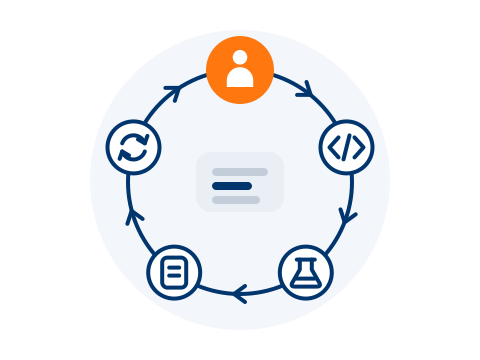
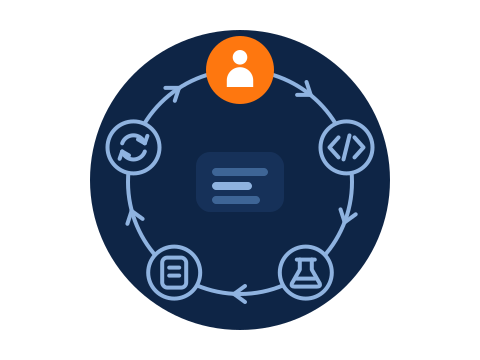
Coding assistants and agents are fast, but speed without a method creates rework. We design the loop your engineers and AI tools work in - plan, generate, review, test, refine - with clear hand-offs, guardrails and review gates, so AI output is something your team can trust and ship.
Who this is for
For teams that adopted AI tools and now need a way of working
Most teams start with individual developers trying assistants on their own. Results vary, review load grows and nobody is sure which output can be trusted. Loop engineering turns that into a shared, repeatable practice.
Engineering leaders rolling out coding assistants or agents
You want consistent results across teams, not a handful of power users and a lot of uncertainty.
Teams where review has become the bottleneck
Pull requests are bigger and arrive faster than reviewers can read them with confidence.
Regulated or security-sensitive products
Healthcare, fintech and retail teams that need traceability for what AI produced and who approved it.
What we do
We design the loop, then run it with you
Each engagement is shaped around your codebase, tools and risk profile. Typical activities include:
Map your current workflow
We observe how work moves from ticket to production today and where AI tools already sit in it, including the unofficial ones.
Design the human-AI loop
Define each stage - plan, generate, review, test, refine - with who (or what) does it, the inputs it needs and the definition of done.
Set guardrails and review gates
Decide where a human must approve, which paths are off-limits for agents, and how secrets, data and licences are protected.
Engineer the context
Structure repository conventions, architecture notes and task briefs so models get the right context and produce less noise.
Right-size the hand-offs
Keep AI-generated changes small and reviewable, with commit and pull-request conventions that make provenance visible.
Measure what changes
Agree a few signals - cycle time, review effort, escaped defects, rework - and track them before and after so decisions rest on evidence.
What you get
Practical artefacts your team keeps using
Everything is written for your engineers, stored in your repositories and owned by you.
- Loop playbook. a short, versioned description of each stage, its owner, inputs and exit criteria.
- Guardrail policy. where agents may and may not act, approval rules and data-handling limits.
- Context pack. repository instructions, architecture summaries and task templates tuned for your tools.
- Review checklist. what reviewers look for in AI-generated changes, ordered by risk.
- Baseline and target metrics. a simple dashboard or sheet with the signals agreed above. [TBD: metric]
- Rollout plan. how the loop moves from the pilot team to the rest of engineering.
How it works
From first workshop to a working loop in weeks, not quarters
Step 01
Discover
Interviews, workflow mapping and a look at recent pull requests to see where AI helps and where it hurts.
Step 02
Design
We draft the loop, guardrails and context pack with your tech leads and agree the metrics to watch.
Step 03
Pilot
One team runs the loop on real work while we pair with them, tune the playbook and remove friction.
Step 04
Scale
We hand over the playbook, train the next teams and set a review cadence so the loop keeps improving.
FAQ
Frequently asked questions
It is the deliberate design of how people and AI tools work together on a change - plan, generate, review, test, refine - with clear hand-offs, guardrails and review gates. The aim is output that is both fast and trustworthy, with feedback from each change improving the next.
No. We work with the assistants and agents you already use, or help you choose through our Right Tool for Each SDLC Stage offering. The loop is designed to survive tool changes.
A focused assessment and loop design usually takes a few weeks; a pilot adds several more. We agree the scope after an initial conversation. [TBD: typical duration]
Related offerings
Keep exploring.
AI SDLC Consulting
All seven offerings for AI-enabled software delivery.
Spec-Driven Development
Specs that people and models can both execute against.
Prompt Engineering
Reusable, versioned, testable prompts for engineering teams.
AI-Generated Code Review
Independent review of code written with assistants and agents.
AI Training for Teams
Hands-on programmes that make good practice a habit.
Contact Stavir
Tell us how your team works with AI today.