



AI SDLC Consulting
AI tools for SDLC: the right tool for each stage
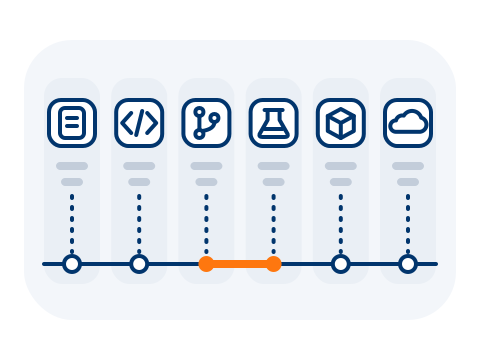
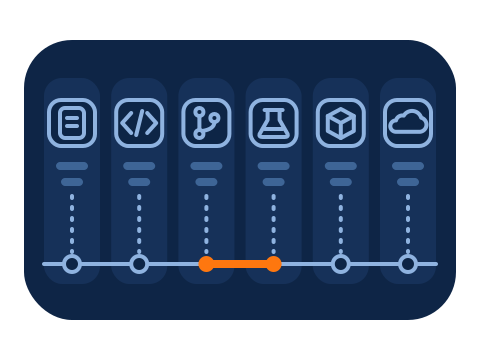
There is an AI tool for every stage of software delivery, and many teams now pay for several that overlap. We help you choose the right AI tools for each SDLC stage - planning, coding, review, testing, release and operations - and integrate them securely, without tool sprawl or licensing surprises.
Who this is for
For teams with too many tools or not the right ones
Tools are often adopted team by team, with little shared evaluation. The result is overlapping licences, uneven security review and integrations nobody owns. We are vendor-neutral, so our advice follows your needs.
Engineering leaders reviewing AI tool spend
You want to know which tools earn their place and which can go.
Security and compliance teams
You need a consistent way to review what each tool can access and where data goes.
Teams starting their AI adoption
You want to choose deliberately rather than inherit whatever each team picked first.
What we do
We build a tooling map that fits you
AI coding tools selection is only part of it. We look at the whole lifecycle.
Inventory current tools
List what is in use across teams - official and unofficial - with cost, usage and the stages each covers.
Define needs per stage
Agree what good looks like for planning, coding, review, testing, release and operations in your context.
Evaluate options
Compare candidate tools on real tasks, judged on fit, integration effort and total cost rather than feature lists.
Security and licensing review
Check data access, retention, IP and licence terms for each tool, with your security and legal teams involved.
Plan integration
Fit chosen tools into your repositories, CI, identity and development loop so they work together.
Avoid sprawl
Set a simple process for proposing, trialling and retiring tools so the map stays tidy over time.
What you get
What you get
A clear picture of your tools today and a plan for tomorrow.
- Tool inventory. current tools, owners, costs and overlaps.
- SDLC tooling map. recommended tools per stage, with reasons and alternatives.
- Security and licensing notes. what each approved tool can access and the terms that apply.
- Integration plan. the order and steps for rolling out or consolidating tools.
- Tool governance process. how new tools are proposed, trialled, approved and retired.
How it works
How tooling strategy works
Step 01
Inventory
We gather what is in use and talk to teams about what helps and what gets in the way.
Step 02
Evaluate
We shortlist and trial options per stage with your engineers, security and procurement.
Step 03
Roll out
We deliver the tooling map and integration plan, and support the first rollout or consolidation.
FAQ
Frequently asked questions
Our recommendations are vendor-neutral and based on your needs and the results of evaluation on your own work.
Not always. A shared default per stage keeps support and security manageable, with room for justified exceptions.
Tools and models are linked but separate choices. Many tools let you choose the underlying model, which is where Model Selection comes in.
Related offerings
Keep exploring.
AI SDLC Consulting
All seven offerings for AI-enabled software delivery.
Model Selection
The right model for each engineering task, chosen on evidence.
Loop Engineering
A plan, generate, review, test, refine loop your team can trust.
AI-Enabled Test Automation
AI-assisted test design, generation and maintenance.
AI Training for Teams
Hands-on programmes that make good practice a habit.
Contact Stavir
Tell us how your team works with AI today.